
Advocacy | Community | Editorial | Empowerment | PHNTX News
“Beyond Our Wildest Imagining”: A Founding Leader Reflects on 40 Years of Prism Health North Texas
Published: 05-29-2026 | 7 MIN READ | Author: Prism Health North Texas
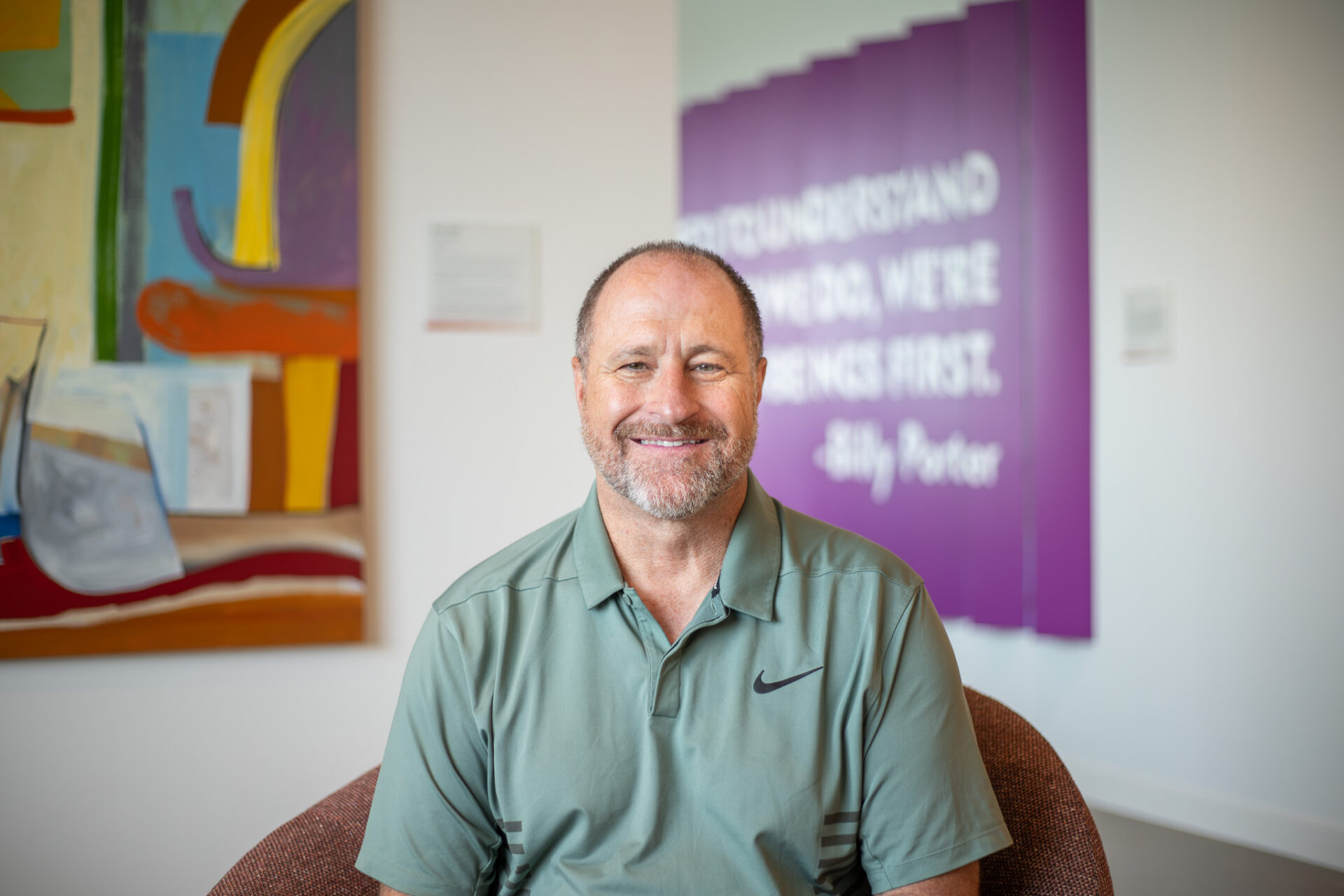
As part of Prism Health North Texas’ 40th anniversary celebration, PACE Coordinator Javier Enriquez sat down with Warren “Buck” Buckingham, founding project director of AIDS ARMS Network, for a candid conversation about the early days of the HIV epidemic in Dallas, the creation of AIDS Arms, and the legacy that continues through PHNTX today.
The discussion reflected not only on the organization’s history, but also on the advocacy, partnerships, anger, compassion, and resilience that shaped the HIV response in North Texas and beyond.
NOTE: Below is an edited Q&A from that conversation. Responses have been lightly condensed for clarity while preserving Buck’s voice and intent.
“Then, Suddenly, Everything Changed.”
Q: Before AIDS Arms and PHNTX, how did you first get involved in HIV/AIDS work?
Buck: I sometimes joke that I’m from the 1900s, and in this case it’s true—I was a young gay man in Dallas in the late 1970s and early 1980s, living my best life when everything began to change. Back then, several gay mental health professionals in Dallas decided it would be powerful to create a telephone-accessible support line for gay folks in crisis. I saw an ad in The Voice, signed up for a weekend of intensive training, and became a volunteer on that hotline.
“I was a young gay man in Dallas in the late 1970s and early 1980s, living my best life when everything began to change.”
When the hotline first went live, the calls were about family conflict, relationships, alcohol, or substance use and how to get help. Then, around 1982–1983, it was as if a switch flipped. Suddenly the calls were, “I’m sick,” “My boyfriend is sick,” or “Someone just died.”
The same mental health professionals who created the hotline went on to form Oak Lawn Counseling Services, which later became Oak Lawn Community Services. Along with the AIDS Resource Center, they became pillars of Dallas’s first response to the epidemic.
I was involved because I was a gay man and deeply worried about my community—and then something very different and much bigger began.
“Dallas Is Different.”
In the mid-1980s, the Robert Wood Johnson Foundation launched a national initiative to help communities build coordinated HIV/AIDS responses. Dallas was one of only 19 metropolitan areas eligible to apply for funding.
Q: How did that early grassroots work lead to the creation of the AIDS ARMS Network?
Buck: In those early years, people were doing everything they could as volunteers—passing donation cans in bars, organizing events—but there were no real resources and very little recognition, especially at the federal level.
The Reagan and Bush administrations wouldn’t even say the word “AIDS” out loud. At one point, the Robert Wood Johnson Foundation decided, with some trepidation, to jumpstart a more comprehensive response in communities where AIDS was hitting hard. They issued a request for proposals inviting cities to replicate what was loosely called the “San Francisco model.”
Dallas was one of 19 eligible metropolitan areas, but the foundation made one critical rule: they would only accept one proposal from each city. They wanted to force collaboration; they didn’t want a bunch of competing proposals.
“The foundation wanted collaboration. They didn’t want a bunch of competing proposals.”
In Dallas, that proved difficult.
Community groups spent two months in meetings—many facilitated by Councilmember Lori Palmer—and all they could agree on was that nobody trusted anybody. The Resource Center didn’t trust Oak Lawn Counseling Services, nobody trusted Parkland, and activist gay organizations weren’t used to working with established institutions.
Out of desperation, Lori invited my boss at the Community Council, Harry Tanner, to meet with this fractured group. Harry came back having committed us to provide technical support to write the grant. I was an associate executive director; he pulled the leadership team together and asked, “What are we going to do?” I raised my hand.
Over six very intense weeks, we got the proposal written, built consensus—never unanimity, but enough to move forward—and submitted it. While we waited, I thought I’d go back to my “kids work” at the Dallas Commission on Children and Youth. Instead, the coalition came knocking and said, “Nobody understands this proposal like you do.” When we learned that Dallas had been funded, I became the first project director of what would become the AIDS ARMS Network.
“You Told Us to Go Home and Die.”
Q: In those early days, who else played a critical role in Dallas’s HIV response?
Buck: If I start naming people, it’s hard to know where to stop. Two names that are too often lost to history are Daryl Moore and Mike Merdian, founders of the People Living With AIDS (PWA) Coalition in Dallas. They were among the first people living with AIDS who stood up and spoke truth to power.
One of the most urgent issues early on was housing. People were being evicted, losing jobs, and unable to pay rent. Oak Lawn Counseling Center launched the first AIDS-specific housing, but it wasn’t enough. The PWA Coalition was determined to force a larger response. Through our connections at the Community Council, we convened leaders from Parkland, Dallas County, and the City of Dallas. I insisted we hear directly from people who needed housing.
Mike gave this incredibly clear, data-driven presentation—no PowerPoint back then, just him making the case. Afterward, someone from the county asked how he’d pulled together such a polished proposal. Mike said, “We’ve had a lot of time on our hands since you told us to go home and die.” That line captured the reality and the anger of the moment.
“We’ve had a lot of time on our hands since you told us to go home and die.”
Daryl had his own unforgettable moment when we arranged for Mayor Annette Strauss to meet people living with AIDS at the Resource Center. She was nervous; everyone was. Daryl showed up in the most starched white shirt I’d ever seen. After she shook their hands, she said, “You don’t look sick.” Without missing a beat, Daryl rolled up his sleeve to reveal Kaposi’s sarcoma lesions on his arm and said, “Visual aids, ma’am.” Those are the kinds of encounters that changed hearts and policy.
From Dallas to Washington to Kenya
The Legacy of Local Advocacy
The work of early HIV/AIDS coalitions in cities like Dallas helped shape the Ryan White CARE Act, which transformed HIV care funding across the United States.
Q: How did the work in Dallas connect to national and even global HIV responses later in your career?
Buck: There was never a grand plan to my career, but looking back, there’s a clear arc. The Robert Wood Johnson demonstration project in Dallas and other cities became the learning lab that helped shape the Ryan White CARE Act. We went from a small pot of foundation money and a dozen partner organizations to state funding—thanks in part to champions like Glenn Maxey in the Texas Legislature—and then to federal demonstration grants and full Ryan White funding. We went from “no money” to ten times the resources practically overnight.
When the federal government needed to staff up to implement the Ryan White CARE Act, they did something unusual and smart: they recruited from the field instead of just moving people around in Washington. Several of us who were project directors in those early demonstration sites were hired into federal roles. That’s how I ended up in Washington, helping manage a program that kept growing, especially after the Vancouver AIDS Conference showed that combination therapy saves lives. At one point, Congress gave us a $100 million supplemental appropriation for the AIDS Drug Assistance Program without our even asking. That’s what sustained, loud, credible advocacy can do.
By the late 1990s, I was getting burned out, but I had the opportunity to go to South Africa for several weeks. That experience convinced me that I wanted to spend the rest of my working life focused on HIV in Africa. I eventually moved from Health and Human Services to USAID and then to Kenya. When President George W. Bush announced the President’s Emergency Plan for AIDS Relief (PEPFAR), we were told to think “blue sky” about what we could responsibly do. In Kenya, we went from roughly $32–33 million to about $96 million in the first year, and by the time I left in 2010, we were managing roughly half a billion dollars annually. The scale of what was possible—once political will, funding, and community commitment aligned—was beyond anything I had imagined when we wrote that first Dallas proposal.
“Don’t Lose the Edge of Your Anger.”
Q: What lessons from those early days are most important for PHNTX staff and newer advocates today?
Buck: First, don’t lose the edge of your anger. Don’t settle for “good enough” when your community’s health and lives are at stake. At the same time, try not to turn that anger inward. In our world, when LGBTQ or AIDS advocates form a firing squad, we tend to stand in a circle. The enemy is not each other.
“In our world, when LGBTQ or AIDS advocates form a firing squad, we tend to stand in a circle.”
Second, always look for surprising allies. When we submitted the original AIDS Arms Network proposal, our coalition included groups many people would have considered unlikely partners: the Salvation Army, Catholic Charities, the Dallas County Medical Society, and more. They didn’t just send letters of support; they signed letters of commitment to show up weekly and coordinate care for individual people living with AIDS.
That’s part of what made funders say, “Dallas is different.”
“Silence Once Meant Death.”
BUCK: Third, never underestimate the power of stories. Clients don’t say the kinds of things that appeared on those 40th anniversary table toppers unless they have been treated as valued human beings. Carry those stories with you—to your families, your faith communities, Austin, Washington—everywhere. Silence once meant death in this movement; speaking up still changes policy and saves lives.
“Silence once meant death in this movement; speaking up still changes policy and saves lives.”
The Next Generation of Advocates
Buck closed the conversation with a message to current and future generations of PHNTX staff, supporters, and advocates.
BUCK: Finally, remember that “new generation” doesn’t just mean people in their twenties. Everyone working at Prism Health North Texas right now is the current generation of advocates. You are part of a long legacy, but you’re also shaping what comes next.
“Stay angry enough to act, joyful enough to sustain the work, and bold enough to believe you can build partnerships and systems that don’t exist yet.”